
Domestic Human Trafficking: An Intersectional Approach
By Kailee Shollenberger
Human trafficking was first viewed as a problem of forced prostitution in the early twentieth century; however, it didn’t garner a lot of attention until the late 1980s. At that time, feminists from around the world began to critique violence against women. Much of the U.S. research on trafficking is focused on sex trafficking and sex work, often presenting them to appear as the same thing, or by declaring an undeniable link between them. However, it is important to differentiate between consensual sex work and sex trafficking, where sex work “entails a willing engagement in commercial sex while sex trafficking involves force, coercion, or defeat.”1
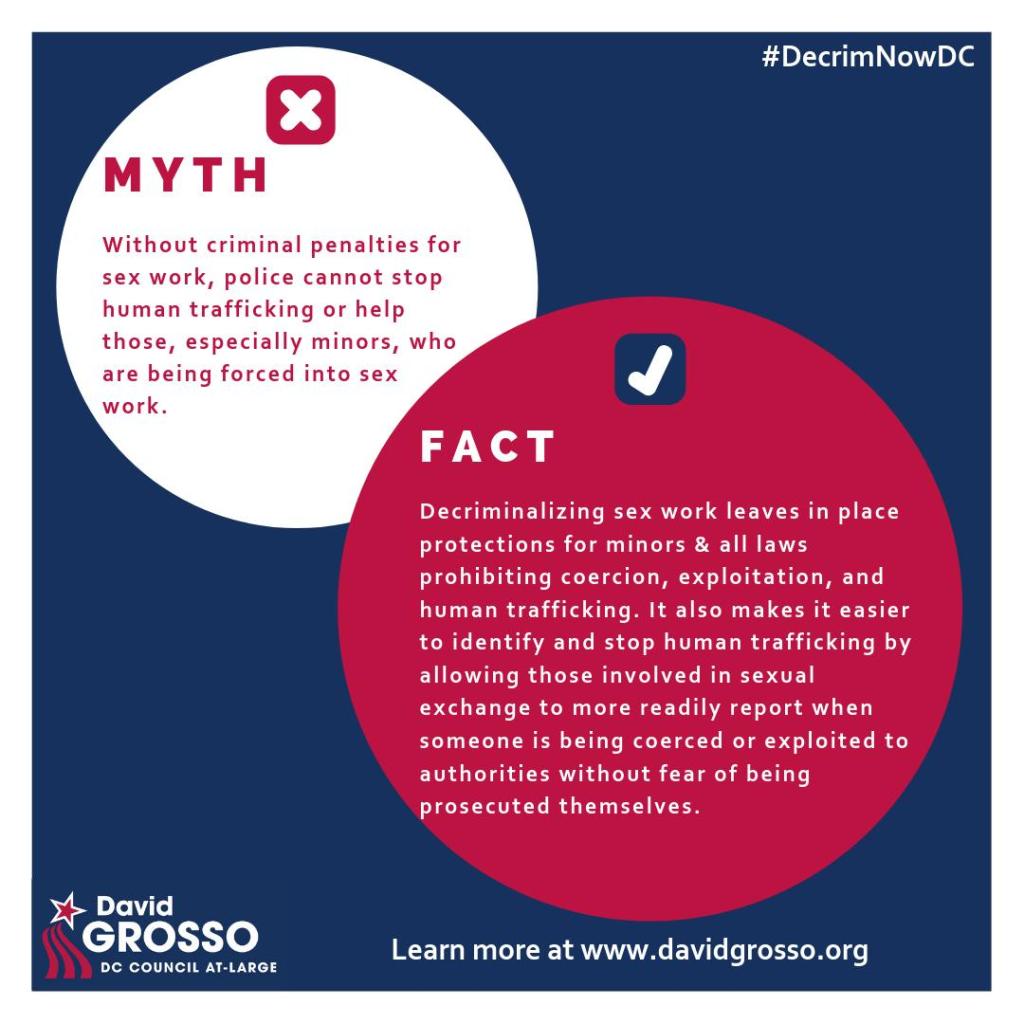
It is necessary to investigate the root of human trafficking, which is the question of why it occurs and how our society perpetuates its existence, rather than only focusing on means of caring for survivors after they have endured the horrors of human trafficking. We need to work on preventing rather than treating. We also must look at victims and survivors from an intersectional perspective to best address those most at risk and most vulnerable to human trafficking. Intersectionality is defined as “a framework for conceptualizing a person, group of people, or social problem as affected by a number of discriminations and disadvantages. It takes into account people’s overlapping identities and experiences in order to understand the complexity of prejudices they face,”2.
Essentially, intersectional theory states that people often face disadvantages from multiple sources of oppression. Thus, human trafficking victims, survivors, and traffickers themselves do not have a single independent identity marker; rather multiple markers come together to create a complex convergence of vulnerability. Looking at one’s identity across multiple intersections tells the story of a person’s life, as we aren’t defined solely by our race or gender or sexuality or class. We are defined by all of them, combined. They each play an important role in our everyday human experiences. It is important to recognize this when analyzing people most vulnerable for human trafficking because there are so many aspects affecting a person’s situation, and it is important to remember that it can happen to anyone.
Victims of domestic human trafficking have been divided into three populations by U.S. Law3:
- Children under the age of 18 induced into commercial sex
- Adults (age 18 or over) induced into commercial sex through force, fraud, or coercion
- Children and adults induced to perform labor or services through force, fraud, or coercion
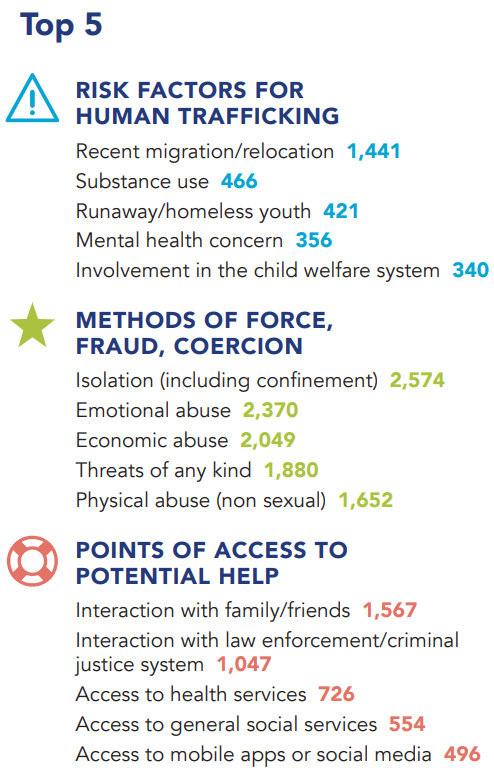
While there is no single profile for trafficking victims and trafficking spans all demographics, there are some vulnerabilities which lead to higher susceptibility to victimization and human trafficking. Runaway and homeless youth are extremely vulnerable to human trafficking. A Chicago study found that “56 percent of prostituted women were initially runaway youth,”3. Individuals who have experienced violence in the past are also more vulnerable as the traffickers often target these victims due to recognizing the vulnerabilities left by prior abuses. Often, survivors have indicated major factors in their path of exploitation being unemployment, unpaid depts, and desperation to provide for themselves and their children.4 Refer to the additional resources page to learn more about other factors affecting one’s vulnerability to human trafficking.
The vulnerability of runaway and homeless youth is only exacerbated when an intersectional approach is taken, analyzing the reason the youth were homeless in the first place. Many LGBTQ youth are forced to run away or are homeless due to their family not accepting them for who they are and kicking them out of their homes5. Among the LGBTQ community, youth often must engage in survival sex to quite literally survive. Survival sex is defined as “the exchange of sex for basic needs, such as housing, food, or clothing.”6 The use of the word “exchange” implies the concept of having a “choice” rather than “force or coercion.” Youth homelessness only increases one’s vulnerability to sex trafficking where “the number of homeless youth who report trading sex for shelter corresponds to the number of youth involved in the sex trade who report having experienced homelessness.”6 LGBTQ youth are at greater risk and are frequently targeted groups for sex trafficking due to their intersectionality between their age, sexual orientation, and class, as they are often homeless and seek shelter in lower income communities. It is necessary to not only analyze the implications of being a part of one of these groups, rather to discuss the effects of being part of many groups.
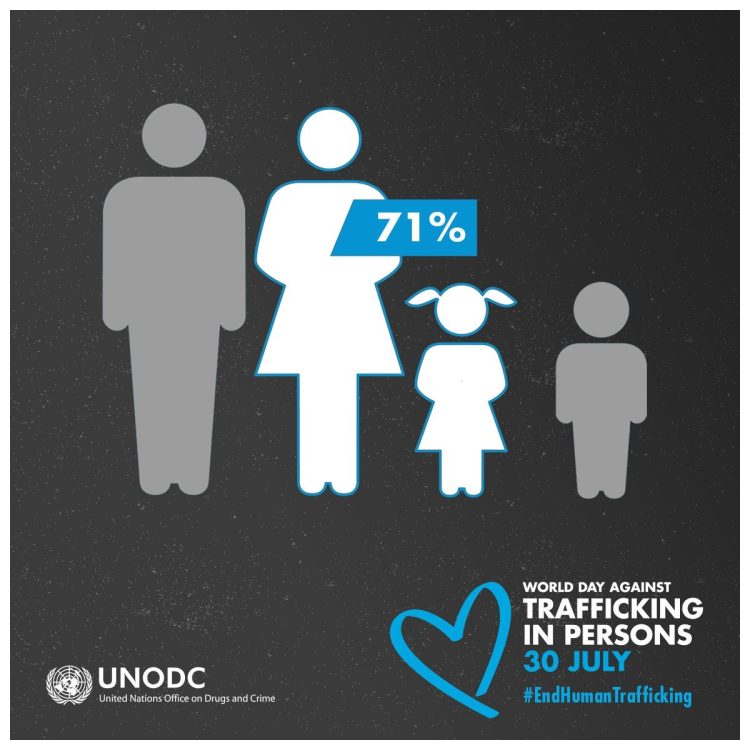
Women and children are the largest groups at risk for human trafficking, potentially due to the inequality between men and women that is an ever-present issue within our society8. The patriarchal organization ruling both our government and society has excluded women from the public sector, labor forces, and higher education for years7. Many feminists have pointed out that “heterosexuality is organized in such a way that the power men have in society gets carried into relationships and can encourage women’s subservience, sexually and emotionally.”7 The stereotype than men are dominant, and women are submissive only enables human trafficking because it supports the notion that men have a type of power and right over women’s bodies. To combat human trafficking, specifically sex trafficking, I feel we need to approach the issue from a feminist perspective and break down the walls of the patriarchy we live in today. Rather than placing emphasis on “saving victims”, the complex and systematic inequalities that create them must be addressed.
(1) Gonzalez, C. M. F. (2017). Race, Gender, and Domestic Human Trafficking: an Intersectional Description of Human Trafficking Cases at the State Level (Graduate Thesis). Retrieved from https://scholar.colorado.edu/cgi/viewcontent.cgi?article=1054&context=socy_gradetds
(2) Alemán, R. (2019, August 2). What is intersectionality, and what does it have to do with me? Retrieved from https://www.ywboston.org/2017/03/what-is-intersectionality-and-what-does-it-have-to-do-with-me/.
(3) The Victims. (2018, April 23). Retrieved from https://humantraffickinghotline.org/what-human-trafficking/human-trafficking/victims.
(4) Sex Trafficking in the U.S.: A Closer Look at U.S. Citizen … (n.d.). Retrieved from https://polarisproject.org/sites/default/files/us-citizen-sex-trafficking.pdf.
(5) [Selections] Barker, Meg-John and Julia Scheele. (2016). Queer: A Graphic History.
(6) Dank, M., Yahner, J., Madden, K., Banuelos, I., Yu, L., Ritchie, A., … Conner, B. (2017, February 1). Surviving the Streets of New York: Experiences of LGBTQ Youth, YMSM, and YWSW Engaged in Survival Sex. Retrieved from https://www.urban.org/research/publication/surviving-streets-new-york-experiences-lgbtq-youth-ymsm-and-ywsw-engaged-survival-sex.
(7) Shaw, Susan and Janet Lee. (2012). “The Social Construction of Sexuality” in Women’s Voices, Feminist Visions, 163-1
(8) Wade, Lisa and Myra Marx Ferree. (2019). “Inequality: Men and Masculinities,” in Gender: Ideas, Interactions, Institutions. New York: W.W. Norton and Company
Follow My Blog
Get new content delivered directly to your inbox.
 Modern Slavery: Human Trafficking